
Spirit Archetype
Discover which of 50 spiritual archetypes matches your personality. From The Mystic to The Warrior - find your inner archetype. Embeddable domain-locked widget, mobile-responsive.
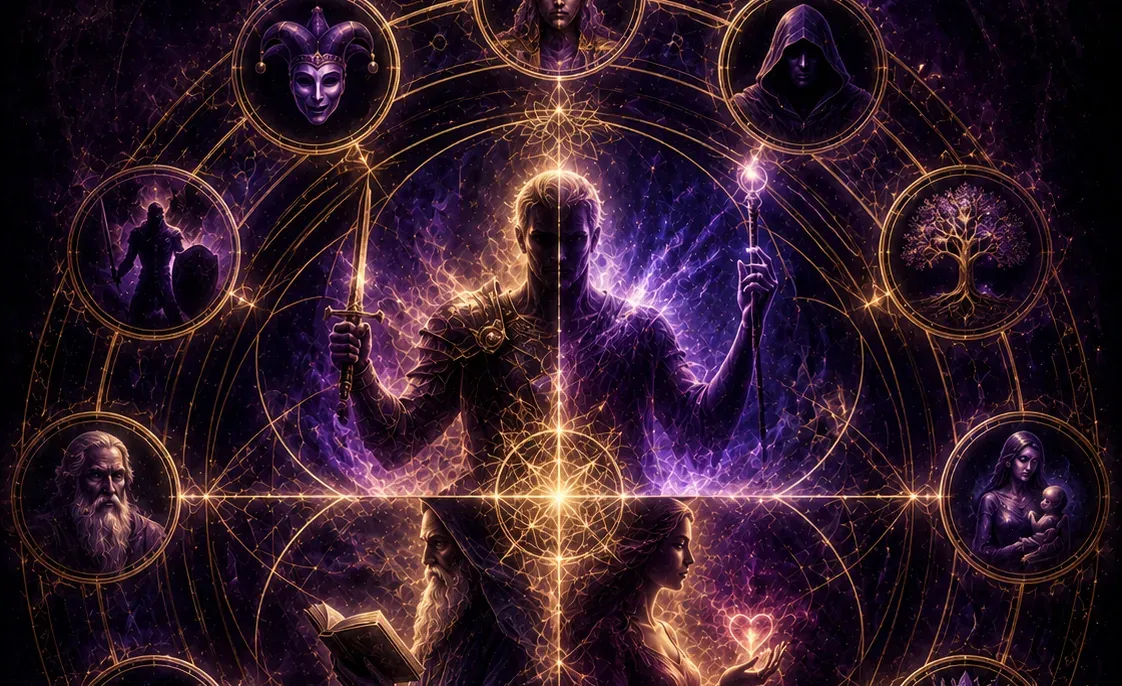
Archetypes - the Warrior, the Lover, the Sage, the Trickster, the Caregiver - aren't personality types in the clinical sense. They're patterns of energy that humans have recognized across cultures for millennia, that Carl Jung formalized in the 20th century, and that show up with remarkable consistency in how people organize their behavior, their relationships, and their sense of meaning. Knowing your dominant archetype doesn't limit you - it helps you see which energy you're most fluent in, and which ones you're less comfortable occupying.
How it works
Answer a set of questions about how you move through actual situations - what you do under pressure, what kind of work feels most like you, how you relate to conflict, what you want others to feel in your presence. The assessment maps your responses to a set of twelve core archetypes and identifies your primary and secondary patterns, with a full reading of what each means.
Understanding your result
The twelve primary archetypes in this system: the Innocent (trust, optimism, the longing for safety), the Sage (knowledge, understanding, the search for truth), the Explorer (freedom, autonomy, the call outward), the Outlaw (revolution, disruption, breaking what shouldn't stay), the Magician (transformation, vision, making things happen), the Hero (courage, competence, the desire to prove ability), the Lover (connection, beauty, the need to be in relation), the Jester (play, humor, the deflation of pretension), the Everyman (belonging, solidarity, the common ground), the Caregiver (protection, service, the nurturing impulse), the Ruler (order, responsibility, the management of complexity), the Creator (innovation, imagination, making something from nothing).
Frequently asked questions
Is this based on Jung's original work?
It draws from Jung's foundational concept of archetypes and the collective unconscious, extended through the work of researchers like Carol Pearson and Margaret Mark who mapped archetypes to behavioral patterns and meaning-making. It's Jungian-adjacent rather than strictly Jungian.
Can I have more than one dominant archetype?
Yes - most people have a primary archetype that's clearly dominant and one or two secondary ones that show up in specific contexts (work vs. relationships, for instance). The reading will identify both.
Can my archetype change over time?
It can shift, especially through significant life transitions. Many people find their secondary archetype becomes more prominent as they mature. The archetype isn't fixed - it describes current dominant patterns.
Is this for entertainment or self-development?
Both. The archetype framework is widely used in coaching, therapy, and storytelling for serious self-understanding. The quiz here is offered for reflection and entertainment, not clinical assessment.