
Palm Heat Reading
When your palms grow warm or cold, energy speaks - learn to read these thermal messages. Embeddable domain-locked widget, mobile-responsive.
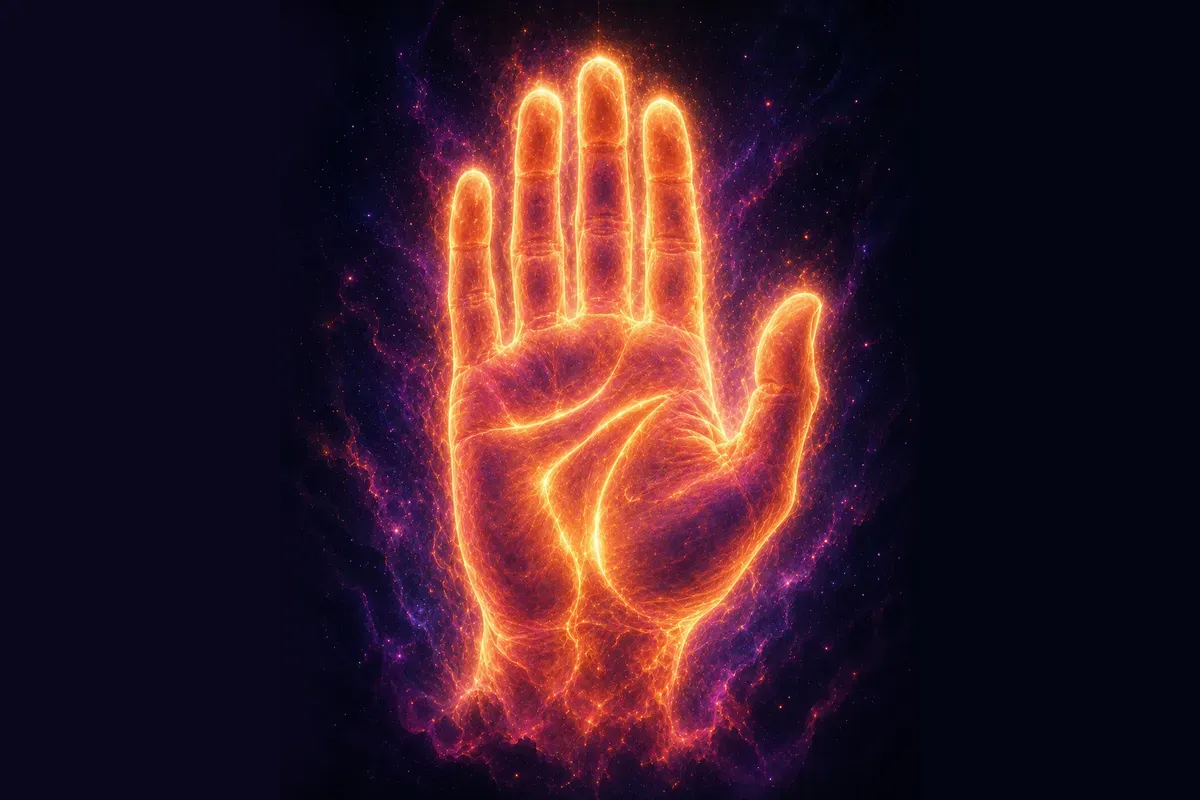
Palmistry is one of the oldest diagnostic traditions in the world - traces of hand-reading appear in ancient India, China, and across the Roman world. The lines on your palm aren't random: they form as a fetus in the womb and change over a lifetime in response to how you use your hands and, practitioners say, how your life unfolds. The heart line, head line, life line, fate line - each tells a different part of the story. This reading walks you through what your specific hand configuration traditionally means.
How it works
The widget guides you through a visual hand map. Select which features are present in your palm - the depth and curvature of your heart line, where your head line starts and ends, the length and branching of your life line. Each selection builds your personal reading. You don't need to be an expert - each option is illustrated.
Understanding your result
The heart line governs emotional expression, relationship patterns, and how you give and receive love. The head line describes your thinking style - analytical or intuitive, narrow-focused or expansive. The life line's common association with lifespan is largely a myth; in practice, it describes vitality, life changes, and connection to family and roots. The fate line (not everyone has a clear one) speaks to career and direction shaped by external circumstances rather than personal choice. Mount development - the raised pads below each finger - adds further nuance about specific qualities.
Frequently asked questions
Which hand do I read - dominant or non-dominant?
Traditional palmistry reads both: the non-dominant hand is said to show innate tendencies and what you were born with; the dominant hand shows what you've developed and chosen. This reading focuses on your dominant hand.
Can palm lines actually change?
Yes - the major lines are relatively stable, but minor lines, depth, and branching can shift over years. Some palmists interpret this as the map updating as the territory changes.
Is palmistry a medical diagnostic tool?
No. Some medical systems have noted correlations between certain hand features and conditions, but palmistry as practiced here is a traditional symbolic system for self-reflection, not a medical diagnostic.
Is this accurate?
Palmistry is a traditional art, not a science. The interpretations reflect centuries of accumulated palm-reading tradition. Use it as a reflective tool and an introduction to a fascinating practice - not as a life plan.