Wax Divination
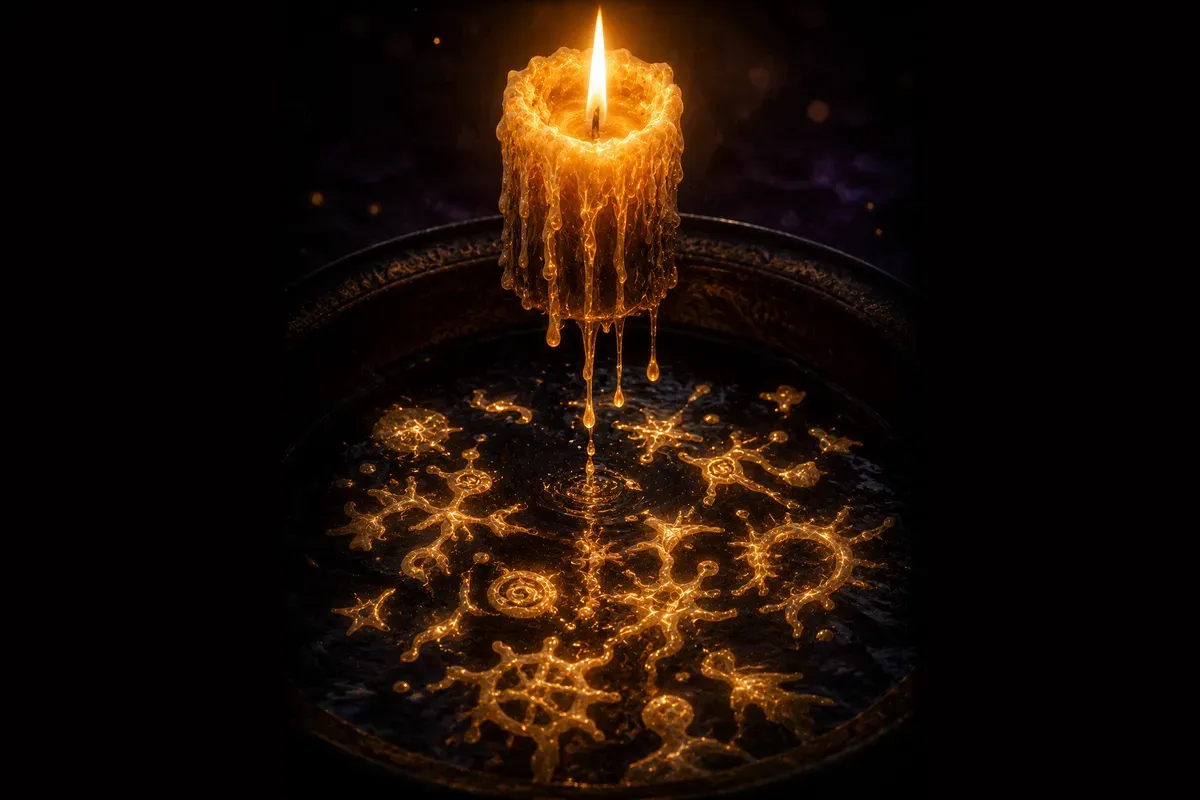
Pour virtual wax into moonlit water and watch as the flowing shapes crystallize into symbols that reveal your destiny. Embeddable domain-locked widget, mobile-responsive.
Add this widget to your site
Free forever. Copy the snippet and paste it into any page — no coding required.
Ceromancy - reading patterns in melted wax - is one of the older forms of divination in European folk tradition. Wax was poured into water, and the shapes it took on cooling were read like clouds: not literally, but symbolically. A bird might suggest news or travel. A hand might suggest help coming, or something offered. The form you're reading is accidental, which is the point - the interpreting mind brings its own patterns to a genuinely random shape.
How it works
The widget simulates the ceromantic process: wax pours and cools into a shape on the water's surface. The shape that forms is then interpreted against a set of traditional ceromantic symbols - animals, objects, natural forms, and abstract shapes - with a brief reading of what each traditionally signifies. You bring your question before the pour; the shape provides the response.
Understanding your result
Ceromantic interpretation works by resemblance and association. A shape that resembles a key traditionally suggests an answer or opening becoming available. A scattered, fragmented pattern often reads as confusion or dispersed energy around the question. A solid center with spreading edges suggests a core that holds even while circumstances are in flux. The readings here draw from folk ceromantic traditions, not a fixed academic canon - different practitioners have read the same shapes differently for centuries.
Frequently asked questions
How is the wax shape generated?
The digital simulation produces randomized wax forms using procedural generation - the shapes are not predetermined. Each pour is different.
Is ceromancy from a specific cultural tradition?
Wax divination appears across European, Middle Eastern, and Latin American folk traditions under different names - ceromancy, cleromancy variations, and molybdomancy (using lead instead of wax). The practices share similar interpretive logic despite different geographic origins.
What if I don't see a clear shape?
That's a valid reading. Ambiguous or fragmented shapes are interpreted in their own right - typically as a sign that the situation itself lacks clear form right now.
Is this for entertainment or serious divination?
It's a reflective and entertainment tool offered in the spirit of folk divination traditions. We don't claim predictive accuracy - what you draw from it is your own interpretation.